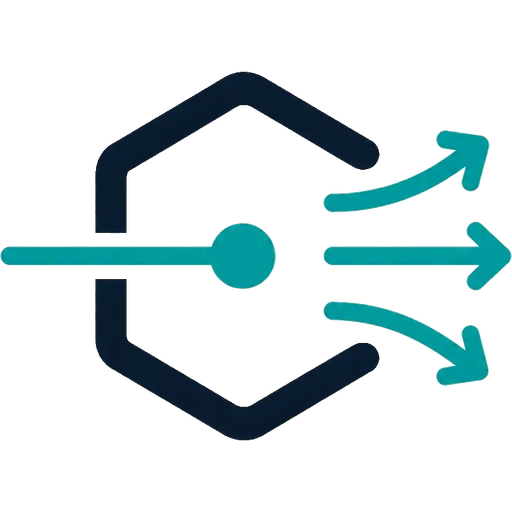
Why rotation matters
When several landing pages, offers or angles need testing, one campaign URL avoids multiplying links across ad networks, emails or partner assets.
Tip: routing rules run before the classic split, then fallback takes over.
Rotation solution
When a campaign has multiple landing pages, offers or angles, the routing engine first checks whether a country, device, browser or language rule applies, then delivers through the selected mode: weighted random, first URL to last, or last URL to first.
When several landing pages, offers or angles need testing, one campaign URL avoids multiplying links across ad networks, emails or partner assets.
Rotation must not be used to hide a forbidden destination. It is meant to split traffic across authorized pages, cut weak pages and adjust weights in a traceable way.
By default, a campaign can deliver through weighted random split. When a stricter flow is needed, it can also serve active URLs from first to last, or last to first, then loop.
The client should understand which destination receives which volume, why a weight changes, which delivery mode is active, and when a URL deserves to be paused.
Related guides
For the next step, see destination health.
For the next step, see bulk URL import.
For the next step, see landing page A/B testing.
For the next step, see click analytics.
When a published link must not become frozen: an already launched campaign, a printed asset, a destination to correct, a weak source to cut or analytics to make readable.
Less manual rework, less lost traffic, more visibility on clicks and a better ability to correct without rebuilding the whole distribution.
Next reading